Why is my attic so hot even with roof vents
Roof vents alone do not cool an attic. The problem is usually balance — intake without exhaust, or exhaust without intake. Here is how attic ventilation actually works in an Urbandale home.
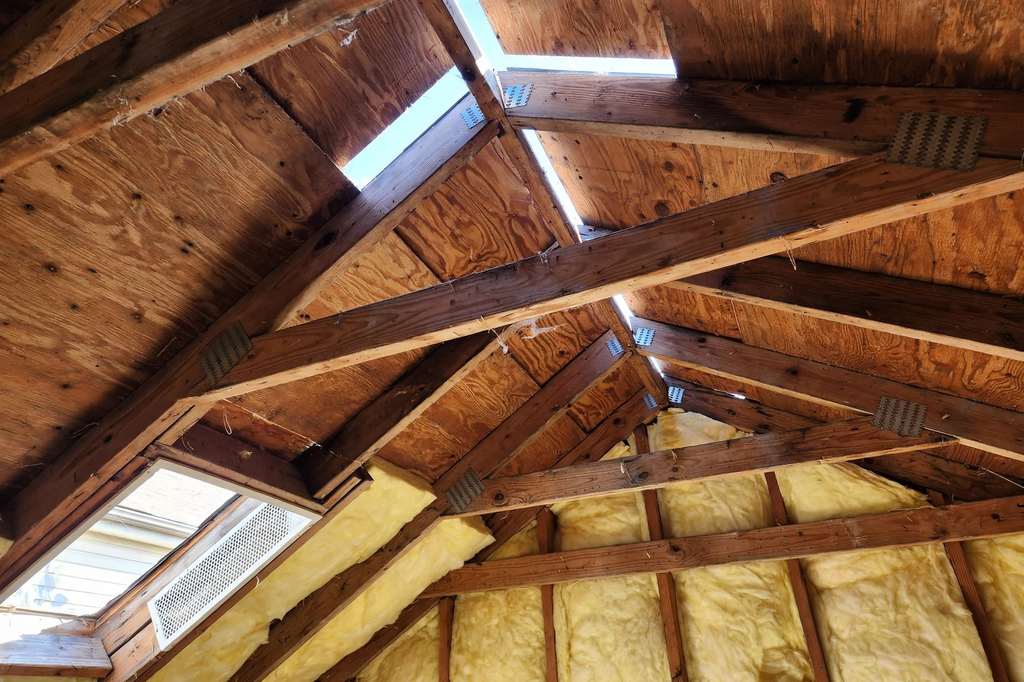
An attic so hot even with roof vents in place stays hot because vents only work as a system. Air must enter low, travel along the underside of the deck, and leave high — and any break in that path leaves heat trapped. This guide explains the balance, the common breaks, and the checks that find them.
Attic heat matters beyond comfort. A hot attic bakes shingles from below, feeds ice dams in winter, and pushes heat into the living space. The fixes are usually matters of airflow and insulation, not more vents.
Why is my attic so hot even with roof vents in Urbandale IA?
Vents do not cool an attic by existing — they cool it by moving air. A ridge vent without intake vents has no air to move. Soffit vents blocked by insulation admit nothing. A powered vent without intake pulls conditioned air from the living space instead of outdoor air. In each case the vents are present and the system is broken.
Heat enters an attic from two directions: sun on the roof above, and warm air rising from the living space below. Ventilation addresses the first by moving air through; insulation and air sealing address the second by slowing the rise. A hot attic usually has trouble on one side or the other — sometimes both.
The check is simple in concept: air in low, air out high, a clear path between, and insulation that does not block the path. The sections below work through each part.
The intake-to-exhaust balance most attics get wrong
Intake and exhaust must be balanced. Exhaust vents at or near the ridge pull air out; intake vents at the eaves or soffits let air in. When exhaust exceeds intake, the system pulls air from wherever it can — including through ceiling gaps from the living space. When intake exceeds exhaust, air enters but has nowhere to go, and the attic stays hot.
Most attics get the balance wrong in the same way: exhaust was added — a ridge vent during a re-roof, for example — while intake stayed blocked or undersized. The ridge vent is visible from outside, so it looks like the job is done. The soffits, where the missing half lives, are harder to see.
Published summaries of the ventilation section of the residential code describe a ratio of 1 to 150 between ventilation area and attic area, reducible to 1 to 300 in some configurations. That ratio comes from a secondary reproduction of the code text, and the exact requirement depends on the code text and the attic's construction — treat any single ratio as a starting point for questions, not a specification for a specific attic.
- Intake: soffit or eave vents, clear of insulation and debris.
- Path: a clear channel along the underside of the deck from eave to ridge.
- Exhaust: ridge vent, gable vents, or roof vents near the peak.
- Balance: intake and exhaust sized to work together, not one without the other.
How hot should an attic get in an Iowa summer?
No single target temperature applies to every attic. Attics run well above outdoor temperature on sunny summer days — that is expected — and the question is not the thermometer reading but whether air is moving through. A still, stifling attic with vents in place signals a broken path, whatever the reading.
What matters is the difference the system makes: an attic with balanced airflow runs closer to outdoor conditions than a sealed one, and the shingles above it age more slowly. No specific temperature figure is published here, because none was verified for Urbandale attics in the research for this site.
If the attic feels like an oven and the vents look intact, the break is usually at the intake or the path. Roof ventilation in Urbandale covers the ventilation side of the system.
Does attic insulation keep the attic cool in Urbandale IA?
Insulation does not cool the attic — it slows heat moving between the attic and the living space. Insulation on the attic floor keeps summer heat above and winter heat below. The attic itself stays hot; the rooms below stay cooler.
Insulation causes trouble when it blocks intake vents. Loose insulation piled against the eaves, or batts pressed into the soffit, starve the ventilation system of intake air. Baffles — channels that hold insulation back from the eave — keep the path open.
Insulation and ventilation are partners, not substitutes. Adding insulation without fixing ventilation leaves a hot attic. Adding ventilation without insulation leaves heat pouring into the rooms below. Both need attention, in the right order: air sealing and insulation first, ventilation balance alongside.
Roof vent types for Urbandale homes
No single vent type suits every roof. Ridge vents run along the peak and exhaust evenly; they need continuous intake to work. Gable vents sit in the end walls and suit some roof shapes; they can short-circuit a ridge vent if both are present. Box or turbine vents exhaust at points rather than along the ridge.
Soffit vents are the intake half: continuous or individual vents under the eaves that admit air along the whole eave line. Their effectiveness depends on staying clear — insulation, paint, and debris all block them.
Powered vents — fans that pull air out — move more air when they run, but they also pull harder on every gap in the ceiling plane when intake is short. They are a tool for specific situations, not a default answer.
Choosing between types depends on the roof's shape, the existing vents, and the attic's construction. A roof inspection in Urbandale can show what is already in place and where the path breaks.
How to cool down an attic in Urbandale Iowa
Cooling an attic is a sequence, not a single purchase. Work through it in order:
- Clear the intake: check soffit vents for insulation, paint, and debris, and clear them.
- Open the path: make sure air can travel from eave to ridge along the deck underside.
- Check the exhaust: confirm ridge or roof vents are open and unblocked.
- Seal the ceiling plane: close gaps around lights, hatches, and chases that leak conditioned air upward.
- Check insulation coverage: even coverage on the attic floor, held back from the eaves by baffles.
Where the system needs work beyond clearing and sealing, roof ventilation in Urbandale covers the ventilation side.
Re-check after changes: an attic that moves air feels different on a hot afternoon, and the difference is noticeable without instruments.
Common mistakes we see on Urbandale attic vent jobs
The mistakes that keep attics hot are usually additions without balance: a vent added here, insulation added there, with no attention to the system.
- Adding a ridge vent without clearing or adding intake.
- Mixing vent types that short-circuit each other, such as gable vents with a ridge vent.
- Blocking soffit vents with insulation or stored items.
- Sealing attic vents shut for winter — ventilation runs year-round.
- Adding a powered vent without fixing intake, pulling conditioned air from below.
Each of these leaves the vents in place and the system broken. The fix is balance, not more openings.
When to call a professional
Call a roofer when the attic stays hot after the intake and path checks, when insulation is missing or blocking vents, or when the roof's vent layout needs professional assessment.
Storm damage can also break ventilation: lifted ridge caps and damaged vents change the airflow. Storm damage roof repair in Urbandale covers the storm side.
Rocc Solid Construction can be reached at (641) 219-5108. The business is open 24 hours, every day.
Frequently Asked Questions
Why is my attic so hot even with roof vents in Urbandale IA?
Usually balance, not vent count. A ridge vent without clear intake has no air to move, and blocked soffit vents admit nothing. Check intake, the path along the deck, and exhaust as one system.
How do I improve attic ventilation in Urbandale Iowa?
Clear soffit vents, open the path from eave to ridge, confirm exhaust vents are unblocked, seal ceiling gaps, and check insulation coverage held back from the eaves.
Does attic insulation keep the attic cool in Urbandale IA?
No — insulation slows heat moving between the attic and the living space; the attic itself stays hot. Insulation helps the rooms below, while ventilation moves air through the attic. Both are needed.
Which roof vent type suits an Urbandale home?
It depends on the roof's shape and what is already installed. Ridge vents exhaust evenly along the peak; gable and box vents suit other shapes; soffit vents supply intake. Mixing types can short-circuit the system, so the layout should be assessed as a whole.
How hot is too hot for an attic?
No single temperature figure is published here. The sign of trouble is still, stifling air with vents in place — that signals a broken airflow path. An attic with balanced airflow runs closer to outdoor conditions.
Get help with Roofing in Urbandale
If your attic stays hot despite the vents, the answer is usually in the balance. Rocc Solid Construction is a roofing contractor in Urbandale.
Call (641) 219-5108 to arrange a look at the ventilation system.