How to spot wind damage on your roof after an Urbandale storm
Urbandale storms can lift and crease shingles without opening an obvious leak. Here is how to spot wind damage on your roof, document it for your insurer, and know when to call.
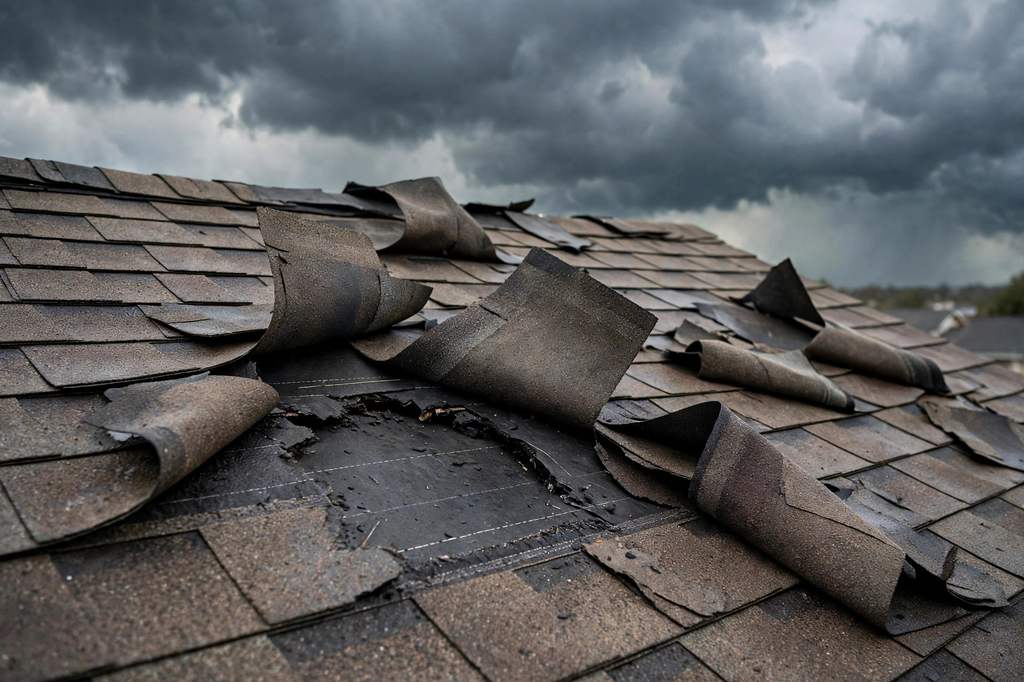
Wind damage is often invisible from the driveway. A shingle can be lifted, creased, and set back down by the same gust, leaving a seal broken and a crease that will fail in the next storm. This guide explains what wind damage looks like on each roof type, how to check from the ground, and how to document what you find.
Urbandale has verified storm history: a preliminary National Weather Service survey recorded an EF1 tornado on July 15, 2024, with estimated winds of 100–105 mph over a 7.23-mile path, 300 yards wide, through Urbandale, Windsor Heights, and Des Moines. The August 10, 2020 derecho brought 75 mph winds measured at Des Moines airport. Both events are stated here with their sources and preliminary status, not as predictions about the next storm.
What wind damage actually looks like on an Urbandale roof
Wind damages a roof by lifting: gusts get under shingle edges and tabs, break the seal, and crease or tear the material. The visible result ranges from a single missing shingle to a slope of lifted tabs that look almost normal from the ground.
What wind damage looks like depends on the covering:
Asphalt shingles
Lifted tabs, creased shingles that fold along a horizontal line, missing shingles, and exposed nail heads. Creasing is the sign most often missed: the shingle lies flat again after the gust, but the crease has weakened it and the seal is broken.
Metal, tile, and flat roofs
On metal roofs, wind loosens fasteners, lifts panel edges, and can peel back flashing. On tile and slate, wind dislodges individual pieces. On low-slope roofs, wind works at membrane edges, seams, and flashing. Each form shows damage at its edges and details first.
How to spot wind damage on your roof in Urbandale IA
Start from the ground and work outward from the house. Wind damage leaves evidence in the yard as well as on the roof: shingle pieces, flashing strips, and debris tell you which slopes took the gust.
Walk the perimeter and look up at each slope. Note lifted or missing shingles, exposed underlayment, bent flashing, and dented gutters. Check the yard for shingle fragments and the gutters for granule piles. Photograph everything with the date.
Do not climb onto a wet or steep roof to confirm what you see. A roof inspection in Urbandale can check seals and creasing up close, where the damage that matters most is found.
What does wind damage look like on a roof in Urbandale Iowa?
Six signs, in the order you are most likely to find them:
- Missing shingles, with underlayment or decking showing through.
- Lifted tabs that no longer sit flat against the course below.
- Creased shingles, folded along a line where the gust bent them.
- Exposed nail heads where shingles have shifted.
- Bent, lifted, or missing flashing at valleys, chimneys, and walls.
- Shingle fragments, granule piles, and debris in the yard and gutters.
Any one of these deserves a closer look. Creased and lifted shingles deserve one even when no leak has appeared, because the broken seal will admit wind-driven rain in a later storm.
How to document wind damage for insurance in Urbandale Iowa
Documentation for your insurer starts on the day of the storm. Photographs taken early show damage before later rain washes granules away and before temporary repairs change the scene. This page is general information, not legal or insurance advice — check your policy, your agent, or your carrier for what your coverage requires.
- Photograph each damaged slope from the ground, then close-ups from a ladder at the eave where safe.
- Photograph yard debris, gutter dents, and any damaged vents or flashing, with a coin or tape measure for scale.
- Record the storm date and time, and keep any weather reports or warnings issued for the area.
- Keep a written log of when damage was noticed and who inspected it.
- Keep damaged materials until the inspection is complete — do not throw them away.
A written inspection report with photographs supports the homeowner's own claim process. Storm damage roof repair in Urbandale covers the repair side of wind events.
Wind damage and insurance: what to check in Urbandale IA
Whether wind damage is covered depends on the individual policy, the cause of the damage, and the condition of the roof before the storm. No general statement here promises coverage, and no deadline is stated: claim-filing time limits were not verified against primary sources in the research for this site, so none is published. Check your policy, your agent, or your carrier.
What helps any claim is documentation: dated photographs, a written inspection report, and a log of the storm and the damage found. Sudden storm damage and long-term wear are treated differently, and the documentation is what separates them.
Do not sign anything that gives a contractor a role in the claim itself — Iowa law bars contractors from negotiating insurance claims, and from offering to absorb the amount a policy leaves the homeowner to pay. Repairs themselves are separate from the claim: see roof repair in Urbandale and storm damage roof repair in Urbandale.
Common mistakes homeowners make after a storm
The most common mistake after a storm is a quick glance from the ground followed by reassurance. Creased shingles and broken seals do not announce themselves from the driveway.
The second is delay. Granules wash away, lifted tabs seal down again in sun, and the visible evidence of a storm fades with each rain — while the weakened shingles remain.
- Walking a wet or steep roof to inspect it.
- Signing with a door-to-door crew before verifying Iowa DIAL registration.
- Accepting an offer to absorb the amount a policy leaves the homeowner to pay — Iowa law bans that practice.
- Making repairs before photographing the damage.
A careful sequence — ground check, photographs, inspection, then repair — protects both the roof and the record.
When to call a professional
Call a roofing contractor when shingles are missing, when tabs are lifted or creased, when flashing is bent, or when water has entered the house. The services page lists the roofing work available from Rocc Solid Construction.
When water is entering the house during or after a storm, describe the situation when you call so the response can be planned. Emergency roof repair in Urbandale covers urgent storm situations. Call (641) 219-5108.
Frequently Asked Questions
How do I spot wind damage on my roof in Urbandale IA?
Walk the perimeter from the ground: look for missing, lifted, or creased shingles, exposed underlayment, bent flashing, and debris in the yard and gutters. Photograph what you find, and have seals and creasing checked up close by an inspection.
What does wind damage look like on a roof in Urbandale Iowa?
On asphalt shingles: lifted tabs, creases, missing shingles, and exposed nails. On metal: loosened fasteners and lifted panel edges. On low-slope roofs: membrane edges, seams, and flashing. Damage shows at edges and details first.
Will insurance cover wind damage to my roof?
That depends on the individual policy, the cause of the damage, and the roof's prior condition — no coverage promise is made here. Dated photographs and a written inspection report support the homeowner's own claim process. Check your policy, agent, or carrier.
What should I do first after wind damage?
Check from the ground, photograph the damage and the yard debris, record the storm date, and arrange an inspection before repairs change the scene. No filing deadline is stated here — check your policy, agent, or carrier.
Can wind damage cause a roof leak without missing shingles?
Yes. A lifted tab with a broken seal admits wind-driven rain even though the shingle is still in place, and a creased shingle may fail in a later storm. A leak with no missing shingles still deserves an inspection.
Get help with Roofing in Urbandale
If a storm has passed and you are unsure what you are looking at, a roofing contractor in Urbandale can check the seals, flashing, and slopes up close and tell you plainly what was found.
Call Rocc Solid Construction at (641) 219-5108 to arrange an inspection after a storm.
Sources: National Weather Service damage survey, July 15, 2024 EF1 tornado (preliminary); Iowa Department of Inspections, Appeals, and Licensing (DIAL) — contractor registration; Iowa Code §103A.71.